
Careless Driving Plea Reduction: What Your State Allows
Find Coverage for My SituationWhat a Careless Driving Plea Reduction Actually Means for Your Insurance
A careless driving conviction is a moving violation in every state, which means points on your license and an insurance rate increase that typically lasts three to five years. A plea reduction — when your attorney negotiates to amend the charge to a lesser offense — can eliminate or significantly reduce that insurance impact, but only if your state's traffic court system allows it and only if the reduced charge qualifies as a non-moving violation.
The insurance consequence matters more than the fine. A careless driving ticket might carry a $200 fine, but the insurance rate increase over three years typically adds $800 to $2,400 in additional premium costs depending on your state, age, and driving record. If your attorney can reduce the charge to a non-moving violation like defective equipment or a parking offense, most insurers will not count it as a moving violation when calculating your rates.
Not all plea reductions protect your insurance record. Some states allow prosecutors to amend careless driving to a lesser moving violation like improper lane change or failure to obey a traffic control device. These are still moving violations — they still add points and still trigger rate increases, just smaller ones. The goal of a plea reduction for insurance purposes is amendment to a non-moving violation, not just a lesser moving violation.
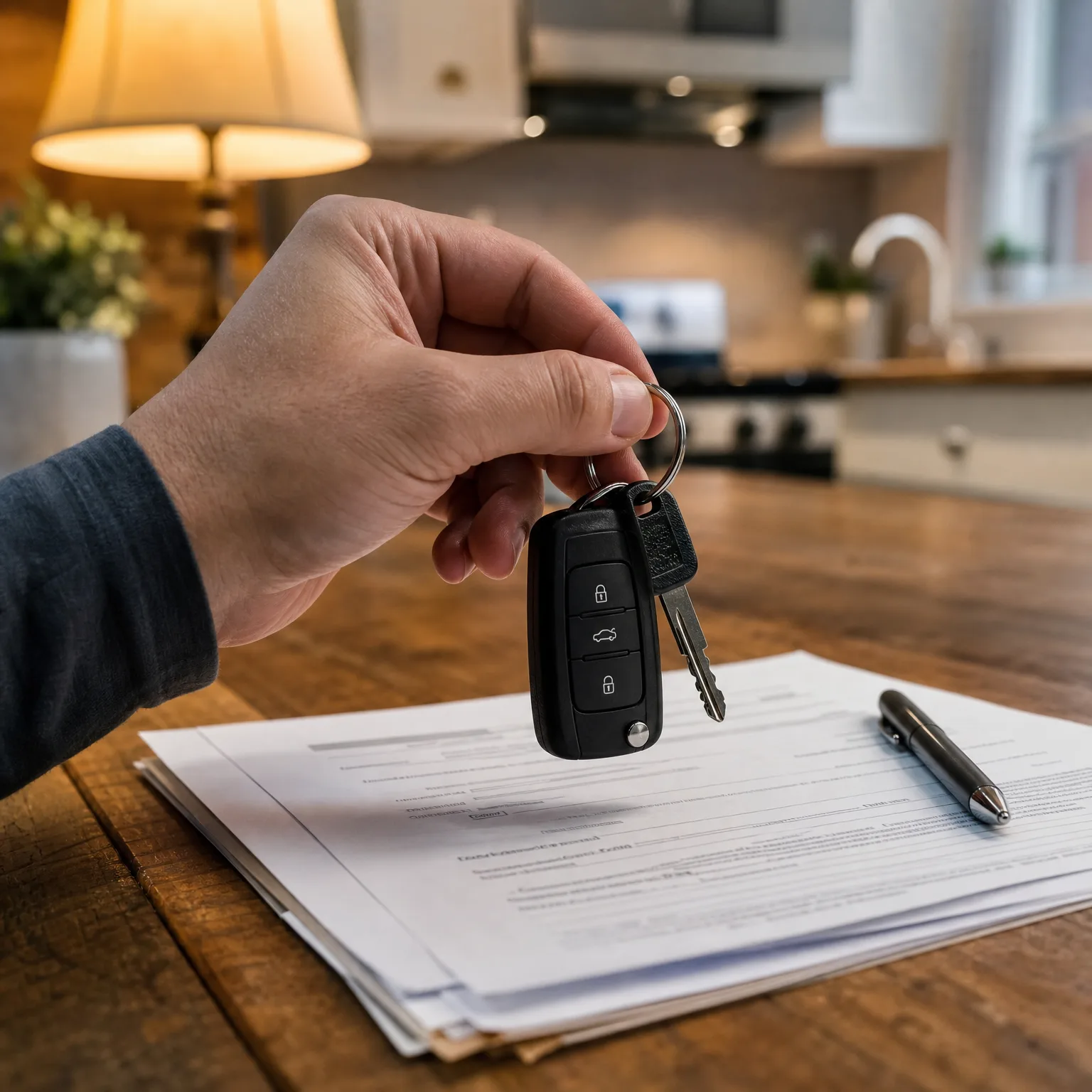
Which States Allow Plea Reductions for Careless Driving
State rules on plea bargaining for traffic violations fall into three categories: states that routinely allow amendment to non-moving violations, states that allow plea reductions only to lesser moving violations, and states that prohibit or severely restrict plea bargaining on moving violations.
States where non-moving plea reductions are common include New York, New Jersey, Ohio, Pennsylvania, and Virginia. In New York, for example, attorneys regularly negotiate careless driving charges down to parking on pavement violations, which carry a fine but no points and no moving violation status. New Jersey prosecutors frequently amend careless driving to unsafe driving, a zero-point moving violation that some insurers treat more leniently. Ohio allows reduction to equipment violations in many jurisdictions.
States with restricted or prohibited plea bargaining include North Carolina, Virginia for certain violations, and Wisconsin. North Carolina's Prayer for Judgment system allows defendants to avoid conviction recording in limited circumstances, but it does not function as a traditional plea reduction. Wisconsin prohibits plea bargaining on speeding violations in many counties but may allow it for careless driving depending on the prosecutor's office.
The specific county or municipality where you were cited matters as much as the state. Some prosecutors' offices allow plea reductions routinely as part of standard practice. Others require a clean driving record or restrict reductions to first-time offenders only. Your attorney's familiarity with the local court system determines whether a reduction is realistically available in your case.


How Insurance Companies Treat Reduced Charges
Insurers pull your motor vehicle record directly from your state's DMV when calculating rates at renewal. What appears on that record determines your rate increase, not what you were originally charged with. If your plea reduction results in a non-moving violation on your official record, most carriers will not count it as a chargeable moving violation.
Carriers differ in how they handle borderline violations. Some treat New Jersey's unsafe driving charge as a moving violation despite its zero-point status. Others ignore it entirely. The specific carrier matters — State Farm, Progressive, and GEICO each maintain their own internal violation categorization systems that do not always align with state point schedules.
You must disclose the original charge when applying for new coverage. Even if your record shows only the reduced charge, insurers ask about citations received in the past three to five years regardless of outcome. Failing to disclose the original charge can result in policy rescission if discovered later. The reduction protects your record for rate calculation purposes, but it does not erase the disclosure obligation.

Get Back to a Fair Rate After a Violation
Find Coverage for My SituationWhat a Plea Reduction Costs and How Long It Takes
Attorney fees for negotiating a careless driving plea reduction typically range from $300 to $800 depending on your state and whether a court appearance is required. Some attorneys charge flat fees for traffic violations. Others bill hourly. The fee is separate from any court fines or costs you pay as part of the amended charge.
The timeline depends on your court date and the prosecutor's caseload. In jurisdictions where plea reductions are routine, your attorney may negotiate the amended charge before your scheduled court appearance, allowing you to resolve the case on the first date. In more restrictive jurisdictions, the process may require multiple court dates or a formal hearing before a judge approves the reduction.
Compare the attorney cost against the insurance savings. If a careless driving conviction would increase your premium by $40 per month for three years, that is $1,440 in additional costs. A $500 attorney fee that eliminates the conviction represents a net savings of $940. The return on investment calculation is straightforward — the question is whether a reduction is available in your jurisdiction.

What Happens to Your Insurance Rates If a Plea Reduction Is Not Available
If your state does not allow plea reductions or your attorney cannot negotiate one, a careless driving conviction will appear on your motor vehicle record and your insurer will apply a rate increase at your next renewal. The increase typically ranges from 15% to 45% depending on your state, carrier, and prior driving record.
Most carriers apply the surcharge for three years from the violation date. Some states including California use a three-year lookback period. Others including New York use three years from conviction date. A small number of carriers extend the lookback to five years for certain violations. The surcharge decreases over time in some rating systems — highest in year one, lower in years two and three.
You have options after conviction. Shopping your policy at renewal often produces better rates than staying with your current carrier and accepting the increase. Carriers weigh violations differently — one moving violation might trigger a 40% increase at State Farm but only 20% at Progressive. Non-standard carriers including Dairyland, The General, and National General specialize in drivers with recent violations and may offer lower rates than standard carriers post-conviction.
Some states allow defensive driving courses to reduce points or mitigate insurance impact. New York's Point and Insurance Reduction Program reduces points and provides a mandatory 10% insurance discount for three years. Other states allow point reduction but do not guarantee an insurance benefit. Check whether your state allows course completion to offset the violation before your insurance renews.

What to Do Right Now
1. Contact a traffic attorney in the jurisdiction where you were cited within 7 days of receiving the ticket. Plea negotiations happen before your court date. Waiting until the week of your hearing limits your attorney's ability to negotiate. Ask specifically whether non-moving plea reductions are available in that court for careless driving charges. If you wait until after conviction, the opportunity to amend the charge is gone.
2. Request a copy of your current motor vehicle record from your state DMV before your court date. Your prior driving record determines whether prosecutors will agree to a reduction. A clean record strengthens your negotiating position. An existing moving violation may disqualify you from reduction eligibility in some jurisdictions. Knowing your record before hiring an attorney allows you to assess realistic outcomes.
3. Contact your current insurance agent or carrier before your renewal date to confirm how they will treat the violation if convicted as charged. Ask how much your rate will increase and how long the surcharge lasts. If the projected increase is substantial, begin shopping for quotes from non-standard carriers 30 days before renewal. Do not cancel your current policy before securing replacement coverage — a coverage gap after a moving violation can trigger license suspension in some states and will worsen your rate quotes.
4. If a plea reduction is not available and you are convicted, compare quotes from at least three carriers within 15 days of conviction. Your current carrier is not required to offer the best post-violation rate. Non-standard carriers including Progressive, Dairyland, The General, and Bristol West often provide lower rates than standard carriers for drivers with recent violations. Rates vary significantly by carrier after a conviction — one quote is not sufficient market research.
5. Confirm whether your state allows a defensive driving course to reduce points or provide an insurance discount, and complete it before your renewal date if available. Some states require course completion within a specific window after conviction. Others allow completion at any time but only credit it once every three years. The discount or point reduction only applies if the course is state-approved and completion is reported to your insurer and DMV before renewal processing.
Frequently Asked Questions
Will a careless driving ticket raise my insurance rates if I pay the fine?
Yes. Paying the fine is the same as pleading guilty — the violation appears on your motor vehicle record as a moving violation and your insurer will apply a rate increase at renewal, typically 15% to 45% for three years. A plea reduction to a non-moving violation is the only way to avoid the insurance impact in states that allow it.
How much does a careless driving conviction increase insurance rates?
Most carriers increase rates 15% to 45% after a careless driving conviction, depending on your state, age, prior record, and carrier. The increase typically lasts three years and adds $800 to $2,400 in total additional premium costs over that period for an average driver.
Can I reduce a careless driving ticket without a lawyer?
In most states, yes, but success rates are significantly lower. Prosecutors are more likely to offer plea reductions to represented defendants because attorneys understand local court procedures and have working relationships with the prosecutor's office. Self-represented defendants often do not know what reduced charges are available or how to request them.
Does a careless driving plea reduction show up on my driving record?
The reduced charge shows up on your record, not the original charge. If your attorney negotiates a reduction from careless driving to defective equipment, your motor vehicle record will show only the equipment violation. Insurers see only what appears on your official DMV record when calculating rates.
How long does a careless driving conviction affect my insurance?
Most insurers apply a surcharge for three years from the violation date or conviction date depending on the state. Some carriers extend the lookback period to five years. After the surcharge period ends, the violation may still appear on your record but typically no longer affects your rate.
Related Articles
Careless Driving Plea: Insurance Rate Impact Explained
5/17/2026
Reckless Driving Plea Reduction by State Guide
5/17/2026
DUI Reduced to Negligent Driving: Insurance Impact
5/17/2026

Careless Driving in VA: 4-Demerit Point Impact
5/17/2026

Careless Driving in PA: 3 Points & Your Insurance Rate
5/17/2026
Dry Reckless Plea: Rate Impact and SR-22 Requirements
5/17/2026