What Affects Rates in Fairbanks
- Limited High-Risk Carrier Market: Fairbanks has fewer than eight insurers actively writing non-standard policies, compared to 15+ in Anchorage. This scarcity means violation drivers often receive only one or two quotes, and those quotes run 15–25% higher than comparable policies in larger Alaska markets due to reduced competition.
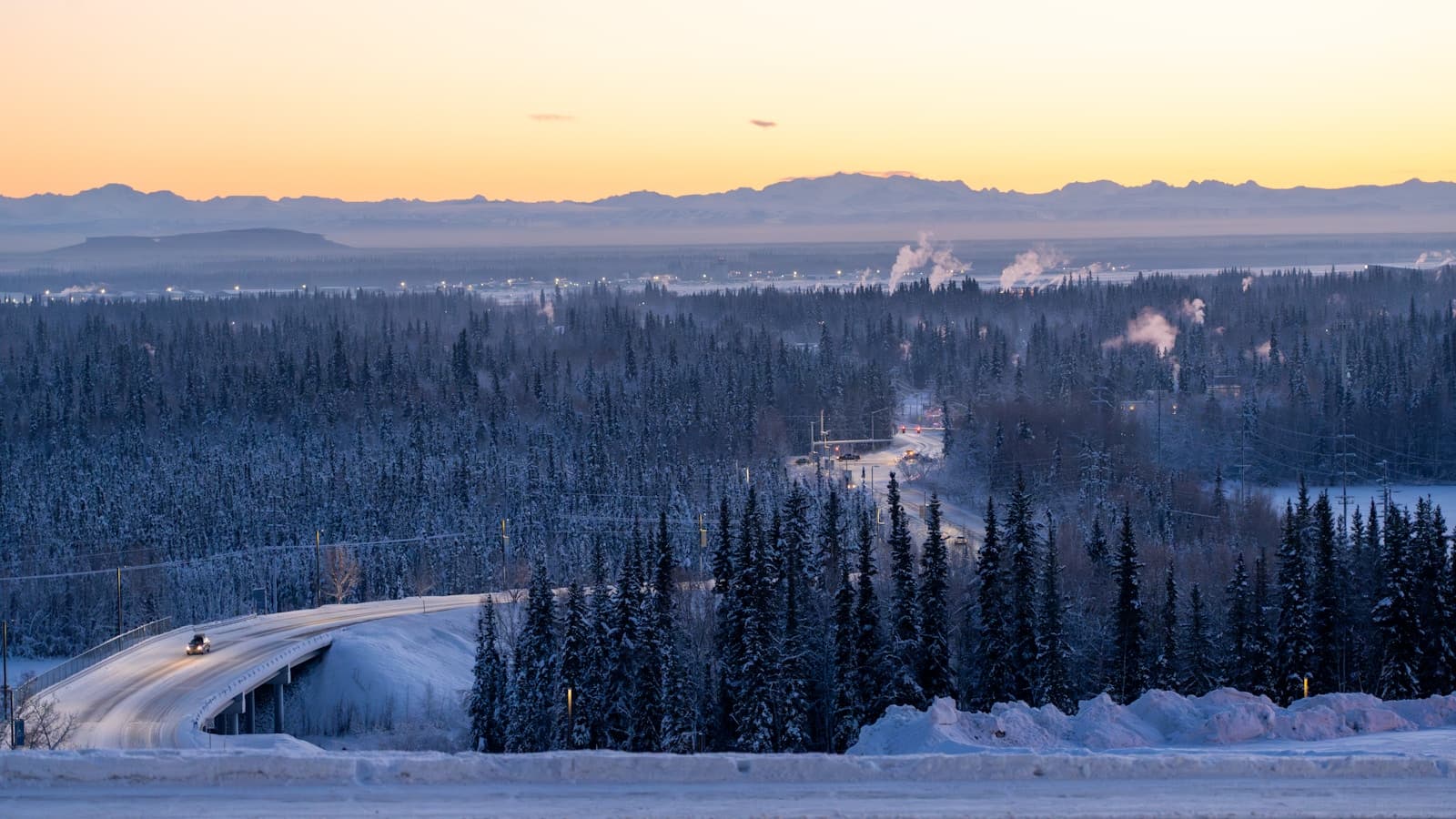
- Extreme Winter Driving Conditions: Fairbanks experiences temperatures below -20°F for extended periods and limited daylight from November through February, creating elevated accident risk that compounds DUI rate increases. Insurers view violation drivers in winter-dominant climates as higher liability, pushing comprehensive and collision premiums 20–30% above what similar drivers pay in milder Alaska cities.
- High Uninsured Motorist Rate in Interior Alaska: Interior Alaska has an estimated uninsured driver rate near 18%, well above the state average of 12–14%. Violation drivers already flagged as high-risk face mandatory uninsured motorist coverage requirements more often in Fairbanks, adding $30–$60 monthly to policies that standard drivers can decline.
- Distance to Court and DMV Facilities: Fairbanks drivers dealing with violations must coordinate with a single Alaska DMV field office and the Fourth Judicial District court system. Missing a filing deadline or court-ordered SR-22 submission due to remote coordination delays can trigger immediate license re-suspension, and insurers charge 10–15% more for reinstatement policies than for continuous coverage.
- Military Population and Base Access Requirements: Fort Wainwright and Eielson Air Force Base require proof of insurance for base access. Violation drivers who work on or frequently access military installations face tighter timelines to secure compliant coverage, and gaps longer than 24 hours can result in base access suspension, increasing urgency and reducing negotiating leverage with high-risk carriers.
Find out exactly how long SR-22 is required in your state
Coverage Recommendations
Cost estimates are based on available industry data and vary by driver profile. These are not insurance quotes.
SR-22 Certificate Filing
SR-22 is not a type of insurance — it is a certificate your insurer files with the state proving you carry the minimum required liability coverage. In Fairbanks, expect a one-time filing fee of $25–$50, and your insurer must maintain the SR-22 for the full court-ordered period, typically three to five years. If your policy lapses for any reason, the insurer notifies the state immediately, triggering automatic license suspension.
$25–$50 filing fee, plus higher premiumsEstimated range only. Not a quote.
Non-Standard Liability Insurance
Non-standard or high-risk insurance is coverage written specifically for drivers with violations, DUIs, or suspensions. Fairbanks non-standard carriers typically quote $180–$380 monthly for state minimum liability limits, compared to $90–$150 for standard drivers. These policies often require six-month prepayment or monthly electronic withdrawal to reduce lapse risk.
$180–$380/month for minimumsEstimated range only. Not a quote.
Full Coverage for Financed Vehicles
If you carry a loan or lease, your lender will require comprehensive and collision coverage regardless of your violation status. In Fairbanks, full coverage for a violation driver runs $320–$580 monthly due to the compounded risk of DUI history and harsh winter conditions that increase claim frequency. Dropping to liability-only is not an option until the loan is satisfied.
$320–$580/month with violationEstimated range only. Not a quote.
Uninsured Motorist Coverage
Given Interior Alaska's 18% uninsured driver rate, many Fairbanks insurers require violation drivers to carry uninsured and underinsured motorist coverage as a condition of policy issuance. This adds $30–$60 monthly but protects you if an at-fault uninsured driver causes an accident, which is statistically more likely in rural and interior regions.
$30–$60/month additionalEstimated range only. Not a quote.